User Authentication
This is a full-stack user authentication system built from scratch, designed to provide a secure and seamless user experience with features like role-based access control and password recovery. The process was exciting as I learned how these features were implemented in various other high-value projects.
This project demonstrates practical application of advanced React concepts including centralized state management through Context API, component composition patterns, and custom hook implementation for authentication logic.
Check out my source code on GitHub and find the demo here.
The Goal
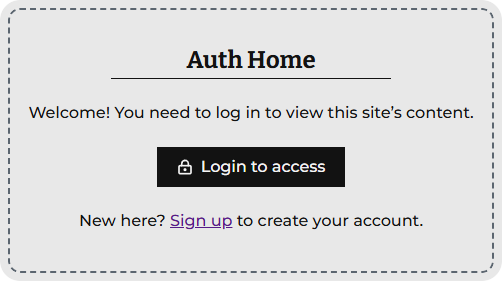
The goal was to build a secure and production-ready authentication system that manages all the core workflows such as route protection, sign up, sign in and sign out operations, role-based access control, and account management.
Why this project? I chose this project out of my curiousity to learn how authentication systems work and the security practices involved.
Tech Stack

The core front-end is based on a React + Next.js (App router) setup. For an authentication API, Firebase Auth and Firestore were chosen for its fast real-time cloud support.
Styling was done with Styled Components for its modular control. The project was deployed using Vercel to make use of its native Next.js support and seamless Git integration benefits.
Technical Challenges
Launching a completely functional User Authentication system required working knowledge of several industry-standard technologies and security practices. Planning the right tech for each stages and integrating them nicely to prepare for a final deployment was challenging.
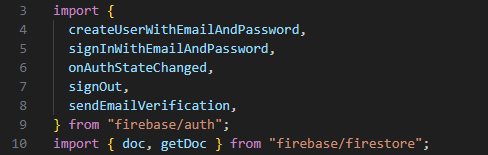
Firebase Authentication SDK and Firestore API
Firebase provides a library of APIs to store, retrieve and authenticate user data on a real-time basis. Learning these APIs and their subtle differences was quite a hurdle.
As a result, the project provided ample scope to experiment with advanced API fetching and management.

Deployment
Initially, the Cloudflare Workers was chosen as the platform for deployment, since this website was already built on top of it and it offers a superfast global CDN and unlimited bandwidth as an added bonus.
But as the project progressed, integrating an auth project with Cloudflare required extra customizations and took a lot of build time optimizations, which led me to realize that Vercel is the better choice for deploying auth-based Next.js projects.
So Vercel won "this" case! Anyways, the demo is now available at both networks, Vercel and Cloudflare. I implemented them to understand both environments..
Lessons Learnt
As the codebase grew larger, the importance of Separation of Concerns became very predominant. This led to the creation of reusable components and custom hooks, minimizing the repetition of logic and code duplication. I used a custom useAuth hook to abstract all Firebase logic and created protected routes using a higher-order component.
Context API for providing auth functions and route protection introduced challenges with asynchronous operations. This required a carefully controlled rendering flow with subtle retry logic and error boundaries to ensure stability.
For source code and documentation see GitHub. Project demo available here.